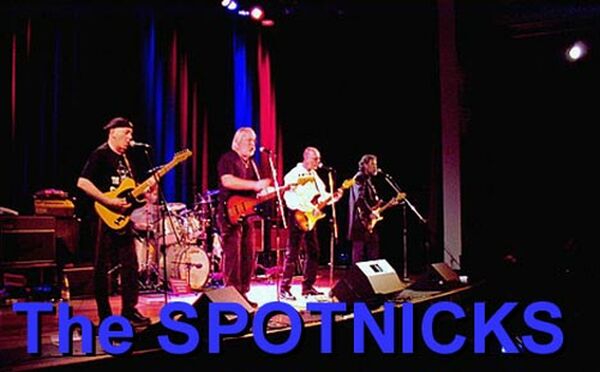
The Spotnicks biography
If remembered at all today, it is probably thanks to their silly
astronaut costumes, but in the '60s, the Spotnicks
were one of the most successful instrumental rock groups, alongside the Shadows
and the Ventures. Their very specific sound had more in common with the
Shadows, being clean, intentionally gentle, and very white. It originated from
their first primitive demo recordings, but the record company liked it and
being plastic and twangy, it was promoted as a space
sound.
Already in the late '60s it was outdated, but that didn't stop the group
from having big success throughout the decade. In the '70s, the sound was
definitely antiquated, but like the Ventures, the Spotnicks
found reliable audiences in Japan
and Germany,
as well as a cult and nostalgia following all over the world. The Spotnicks have sold over 20 million albums, making them
among the most successful Swedish groups ever, surpassed perhaps only by ABBA
and Roxette. By the late '90s, they had released 39
studio albums, recorded roughly 700 songs, and had more than a hundred members
in the different constellations of the band.
The Spotnicks
was formed in Göteborg,
Sweden, in
1957, by guitarist and undisputed bandleader Bo Winberg.
The other members were guitarist and singer Bob Lander, drummer Ove Johansson, and bassist Björn Thein, several of whom had already played together in local
rock & roll bands like the Blue Caps, Rock Teddy, and the Rebels. The first
year, they performed under the name the Frazers, but
soon changed it to the Spotnicks. In 1961, they were
signed by Karusell and released their first singles
containing mostly instrumental covers of famous songs. The selection of songs
was as varied as the performance was homogenous, including titles like "Hava Nagila" and
"Johnny Guitar."
Later the same year, the Spotnicks toured Germany, France,
and Spain and in 1962, they
released the debut album The Spotnicks in London, recorded on their first trip to England. Featured
on this tour were the space suits that the band would wear on-stage until 1969.
"Hava Nagila"
became a hit in England
in 1963 and the same year, Johansson left and was replaced by Derek Skinner. The
rest of the '60s meant increasing success in Europe, the U.S., and Japan,
and the band even managed to compete with themselves on the Japanese charts
when the Spotnicks' song "Karelia" took the first position from the
Feenades' "Ajomies."
The song was the same, just recorded under different titles. The Feendes were a Finland-based side project to the Spotnicks, built on Winberg and
Peter Winsnes, who had joined the Spotnicks
in 1965. Winberg also released less successful
recordings under the name the Shy Ones. Compared to the following decades, the
'60s were a relative stable period for the group when it came to the lineup. Some new members were recruited though, like
drummer Jimmie Nicol, bassist Magnus Hellsberg, and drummer Tommy Tausis,
who had earlier played with Tages In 1969, the Spotnicks disbanded, but Winberg
continued to record using the name until the group reunited in 1972 on request
by a Japanese record company. The same year, "If You Could Read My
Mind" from the album Something Like Country became a big hit in Germany. The Spotnicks would keep their popularity there for a long
time, even as it faded elsewhere. Only the Japanese audience proved more
faithful and accordingly, the Spotnicks located most
of their tours during the '70s to these countries. After the release of
Something Like Country in 1972, by many fans seen as the Spotnicks'
best album, they had practically ended being a band, consisting mainly of Winberg and various session musicians. If the Spotnicks had started out as rock & roll, in the '70s
they turned more and more into an easy listening, or even exotica act, but
maybe not so much by changing their own sound as by stubbornly keeping it while
the trends changed. In the '80s, they had definitely taken the full step to
become a curiosity at home, but kept up their popularity in Germany and Japan. During the '90s, Winberg still toured using the name the Spotnicks,
but to little attention. And even in their hometown of Göteborg,
the Spotnicks were mainly forgotten, except for an
occasional article in the local paper reminding the readers of some guys with
silly helmets who were once international stars.