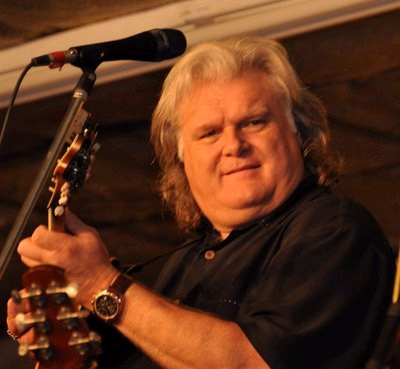
Ricky
Skaggs biography
By the time he was in his midthirties,
Kentuckian Ricky Skaggs had already produced a career's worth of music. At age
seven he appeared on TV with Flatt & Scruggs; at
15 he was a member of legendary Ralph Stanley's bluegrass band (with fellow
teenager Keith Whitley). None of his '80s peers, male or female, had better
musical credentials than Skaggs. The term "multi-talented" lacks the
power to characterize this extraordinary singer and instrumentalist. Not only
can he sing and pick with the best in progressive country, his broad and deep
experience in traditional music separates him from the crowd. In the estimation
of many, he is without peer as a combination vocalist and instrumentalist
(guitar, mandolin, fiddle, banjo). After
playing with Ralph Stanley for three years, Skaggs moved on to progressive
bluegrass bands the Country Gentlemen and J.D. Crowe & the New South.
With his own band, Boone Creek, he mixed the old and the new, adding Django Reinhardt. Skaggs took Rodney Crowell's place in
Emmylou Harris' Hot Band in 1977, and the band's excellent Roses in the Snow
album showcased Skaggs' versatility. Two number one hits came out of his 1981
album Waitin' for the Sun to
Shine, and the awards started arriving. Skaggs is largely responsible for a
back-to-basics movement in country music. He showed many that a bluegrass tenor
with impeccable taste and enormous talent could sell traditional country in the
'80s, a time when pop music had invaded the land of rural rhythm.
Skaggs began playing music at a very early age, being given a mandolin
from his father at the age of five. Before his father had the time to teach
Ricky how to play, the child had learned the instrument himself, and by the end
of 1959, he had performed on-stage during a Bill Monroe concert, playing
"Ruby Are You Mad at Your Man" to great acclaim. Two years later,
when Skaggs was seven, he appeared on Flatt &
Scruggs' television show, again to a positive response. Shortly afterward, he
learned how to play both fiddle and guitar and began playing with his parents
in a group called the Skaggs Family. In addition to traditional bluegrass,
Skaggs began absorbing the honky tonk of George Jones
and Ray Price and the British Invasion rock & roll of the Beatles and the
Rolling Stones. In his adolescence, he briefly played in rock & roll bands,
but he never truly abandoned traditional and roots music.
During a talent concert in his midteens, he
met Keith Whitley, a fellow fiddler. The two adolescents became friends and
began playing together, with Whitley's brother Dwight on banjo, at various
radio shows. By 1970, they earned a spot opening for Ralph Stanley. Following
their performance, Stanley invited the duo to join his supporting band, the
Clinch Mountain Boys, and they accepted. Over the next two years, they played
many concerts with the bluegrass legend and appeared on his record Cry From the Cross. Skaggs also appeared on Whitley's solo album
Second Generation Bluegrass in 1972.
Though he had made his way into the bluegrass circuit and was actively
recording, Skaggs had grown tired of the hard work and low pay in the Clinch
Mountain Boys and left the group at the end of 1972. For a short while, he
abandoned music and worked in a boiler room for the Virginia Electric Power
Company in Washington, D.C., but he returned to performing when the Country
Gentlemen invited him to join in 1973. Skaggs spent the next two years with the
group, primarily playing fiddle, before joining the progressive bluegrass band
J.D. Crowe & the New South in 1974. The following year, he recorded another
duet album with Whitley, That's It, and then formed
his own newgrass band, Boone Creek, in 1976. In
addition to bluegrass, the outfit played honky tonk
and Western swing. Boone Creek earned the attention of Emmylou Harris, who
invited Skaggs to join her supporting band. After declining her several times,
he finally became a member of her Hot Band once Rodney Crowell left in 1977.
Between 1977 and 1980, Skaggs helped push Harris toward traditional
country and bluegrass, often to great acclaim. Skaggs also pursued a number of
other musical venues while he was with Harris, recording a final album with
Boone Creek (1978's One Way Track), two duet albums with Tony Rice (1978's Take
Me Home Tonight in a Song, 1980's Skaggs & Rice), and finally, his first
solo album, Sweet Temptation, which was released on Sugar Hill. Sweet
Temptation was a major bluegrass hit, earning the attention of the major label
Epic Records. The label offered him a contract in 1981, releasing Waitin' for the Sun to Shine later
that year. The album was a big hit, earning acclaim not only in country
circles, but also in rock & roll publications. By the end of the year,
Skaggs had become a star and, in the process, brought rootsy
traditional country back into the consciousness of the country audience.
During 1982 and early 1983, he had five straight number one singles --
"Crying My Heart Out Over You," "I Don't Care," "Heartbroke," "I Wouldn't Change You If I
Could," "Highway 40 Blues" -- as well as earning numerous
awards. Later in 1982, he was made the youngest member of the Grand Ole Opry. For the next four years, he was a major artistic and
commercial force within country music, raking up a string of Top Ten hits and
Grammy Award-winning albums. His success helped spark the entire new
traditionalist movement, opening the doors for performers like George Strait
and Randy Travis. Toward the end of the decade, Skaggs wasn't charting as
frequently as he had in the past, but he had established himself as an icon. Each
of his records sold well, and he collaborated with a number of musicians,
including Rodney Crowell, the Bellamy Brothers, Johnny Cash, Jesse Winchester,
and Dolly Parton.
During the early '90s, Skaggs and his traditional music were hit hard by
the slick sounds of contemporary country, and consequently, his records ceased
to sell as consistently as they had ten years earlier. Columbia Records dropped
the musician from their label in 1992 due to poor sales. However, Skaggs
continued to perform concerts and festivals frequently, as well as host his own
syndicated radio program, The Simple Life, which hit the airwaves in 1994. The
following year, Skaggs returned to recording with Solid Ground, his first album
for Atlantic Records. Life Is a Journey followed in 1997, and two years later
he released Soldier of the Cross. Big Mon: The Songs of Bill Monroe followed in
2000 and was re-released in 2002 on the Lyric Street label as Ricky Skaggs and
Friends Sing the Songs of Bill Monroe. In 2003, Skaggs released Live at the
Charleston Music Hall on his own Skaggs Family label, followed by Brand New
Strings in 2004 and Instrumentals in 2006.