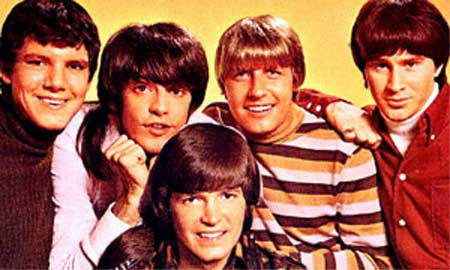
Paul Revere & The Raiders biography
Formed in
Group manager and disc jockey Roger Hart then
financed a demonstration tape which in turn engendered a prestigious recording
deal with CBS Records. Their version of bar band favourite "Louie
Louie" was issued in 1963, but although highly successful regionally, was
outsold by local rivals the Kingsmen who secured the national hit.
A year passed before the Raiders recorded a
new single, during which time Phil Volk had replaced Holliday. "Louie Go
Home" showed their confidence remained undiminished, but it was 1965
before the Raiders hit their commercial stride with the punky "Steppin'
Out". By this point the band was the resident act on Where The Action Is, Dick Clark's networked, daily television
show. The attendant exposure resulted in a series of classic pop singles,
including "Just Like Me" (1965) "Kicks",
"Hungry", "Good Things" (all 1966) and "Him Or Me -
What's It Gonna Be?' (1967), each of which were
impeccably produced by Terry Melcher. However, the Raiders" slick stage
routines and Revolutionary War garb - replete with thigh-boots, tights, frilled
shirts and three-cornered hats - was frowned upon by the emergent underground
audience.
The departures of Smith, Levin and Volk made little difference to the Raiders'
overall sound, enhancing suspicion that session musicians were responsible for
the excellent studio sound. Later members Freddy Weller (guitar), Keith Allison
(bass) and Joe (Correro) Jnr. (drums) were nonetheless accomplished musicians,
and thus enhanced the professional approach marking Hard 'N' Heavy (With
Marshmallow) and Collage. Despite inconsistent chart places, the group
maintained a high television profile as hosts of Happening 68. In 1969 Lindsay
embarked on a concurrent solo career, but although "
Two years later the Raiders scored an
unexpected
The Raiders flourished briefly during the US
Bicentennial celebrations, before emerging again in 1983 mixing old favourites
and new songs on their Raiders America label. This regeneration proved
short-lived, although