 Biography
Radiohead was one of the few alternative
bands of the early '90s to draw heavily from the grandiose arena rock that
characterized U2's early albums. But the band internalized that epic sweep, turning
it inside out to tell tortured, twisted tales of angst and alienation. Vocalist
Thom Yorke's pained lyrics were brought to life by
the group's three-guitar attack, which relied on texture -- borrowing as much
from My Bloody Valentine and Pink Floyd as R.E.M. and Pixies -- instead of
virtuosity. It took Radiohead awhile to formulate their signature sound. Their
1993 debut, Pablo Honey, only suggested their potential, and one of its songs,
"Creep," became an unexpected international hit, its angst-ridden
lyrics making it an alternative rock anthem. Many observers pigeonholed
Radiohead as a one-hit wonder, but the group's second album, The Bends, was
released to terrific reviews in the band's native Britain in early 1995,
helping build a more stable fan base. Having demonstrated unexpected staying
power, as well as increasing ambition, Radiohead next released OK Computer, a
progressive, electronic-tinged masterpiece that became one of the most
acclaimed albums of the '90s.
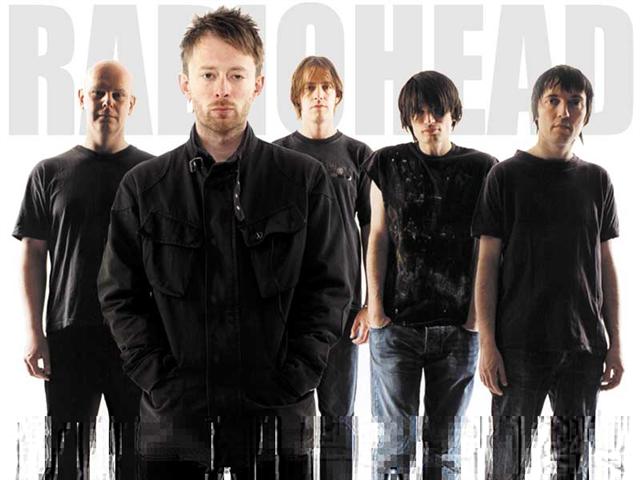
Thom Yorke (vocals, guitar), Ed O'Brien
(guitar, vocals), Jonny Greenwood (guitar), Colin Greenwood (bass), and Phil Selway (drums) formed Radiohead as students at Oxford
University in 1988. Initially called On a Friday, the band began pursuing a
musical career in earnest in the early '90s, releasing the Drill EP in 1992.
Shortly afterward, the group signed to EMI/Capitol and released the single
"Creep," a fusion of R.E.M. and Nirvana highlighted by a noisy burst
of feedback prior to the chorus. "Creep" was a moderate hit, and
their next two singles, "Anyone Can Play Guitar" and "Pop Is
Dead," built a small following, even as the British music press ignored
the group. Pablo Honey, Radiohead's debut album, was released to mixed reviews
in the spring of 1993. As the band launched a European supporting tour,
"Creep" became a sudden smash hit in America, earning heavy airplay
on modern rock radio and MTV. On the back of the single's success, Radiohead
toured the U.S. extensively, opening for Belly and Tears for Fears. All the exposure
helped Pablo Honey go gold, and "Creep" was re-released in the U.K.
at the end of 1993. This time, the single became a Top Ten hit, and the band
spent the following summer touring the world.
 Although "Creep" made Radiohead a success, it also led many
observers to peg the band as a one-hit wonder. Conscious of such thinking, the
group entered the studio with producer John Leckie to
record its second album, The Bends. Upon its spring 1995 release, The Bends was
greeted with overwhelmingly enthusiastic reviews, all of which praised the
group's deeper, more mature sound. However, positive reviews didn't sell
albums, as Radiohead struggled to be heard during the U.K.'s summer of Britpop
and as American radio programmers and MTV ignored the record. The band continued
to tour as the opening act on R.E.M.'s prestigious
Monster tour. By the end of the year, The Bends began to catch on, thanks not
only to the band's constant touring but also to the stark, startling video for
"Just." The album made many year-end best-of lists in the U.K., and
early in 1996 the record re-entered the British Top Ten and climbed to gold
status in the U.S., helped in the latter by the video for "Fake Plastic
Trees." During the first half of 1996, Radiohead continued to tour before
re-entering the studio that fall to record their third album, OK Computer,
which was released in the summer of 1997. A devoted following of fans and a
handful of enthusiastic critical supporters immediately embraced the album's
majestic blend of unfettered prog rock, post-punk
angst, eerie electronic textures, and assured songwriting.
Since it skillfully teetered between rock classicism
and futurism, it earned near-unanimous critical and popular support over the
course of the year, which turned into unrestrained adoration in the final two
years of the decade, even though its sales still hadn't climbed above gold
status.
Expectations for Radiohead's fourth album were stratospheric, which
placed additional pressure on the already perfectionist band, and led to
several stumbling blocks along the way. An intense buzz of excitement among the
band's still-growing following greeted the pre-release appearance of most of
the album's tracks on the Internet in MP3 form; they displayed an all-out
fascination with challenging, often minimalist electronica.
Titled Kid A, the album was finally released in October 2000 and astonished
many observers by debuting at number one on the U.S. album charts. While the
band didn't release any singles or embark on a formal tour, the album met with
a mixed critical response as the group was accused of creating a distant and
radio-unfriendly record; however, it did remain a fan favorite.
In June of 2001, Radiohead quickly released an album under the name Amnesiac
that consisted of material that was recorded during the Kid A sessions. The
band made it very clear, though, that it was not to be considered an outtakes
album; rather, they insisted that the two albums were of clear and separate
concept. Regardless, Amnesiac debuted at number one in the U.K. and number two
on the U.S. chart (behind then-stronghold Staind),
while outselling Kid A in week one by 25,000 copies. The singles Pyramid Song
and Knives Out were culled from Amnesiac with a subsequent world tour. While
planning "I Might Be Wrong" for a third single, the idea expanded
into a live "mini-album," titled after the track,
that was released in November of 2001. Hail to the Thief, the proper
follow-up to Amnesiac, was relatively direct in structure and peaked at number
three on the U.S. chart. Sporadic recording sessions resumed in early 2005, but
a projected release date for the band's seventh studio album remained 2007 as Yorke prepared a solo album, The Eraser, which was issued
in July of 2006