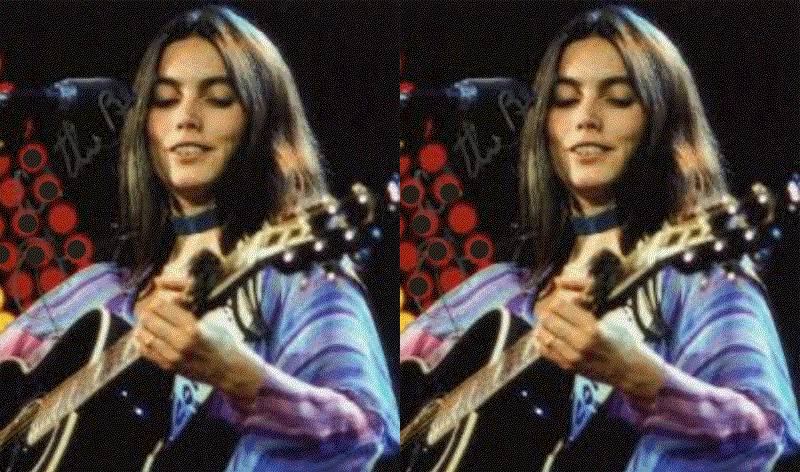
Emmylou Harris biography
Though other performers
sold more records and earned greater fame, few left as profound an impact on
contemporary music as Emmylou Harris. Blessed with a crystalline voice, a remarkable
gift for phrasing and a restless creative spirit, she traveled
a singular artistic path, proudly carrying the torch of "Cosmic American
music" passed down by her mentor, Gram Parsons. With the exception of only
Neil Young - not surprisingly an occasional collaborator - no other mainstream
star established a similarly large body of work as consistently iconoclastic,
eclectic or daring; even more than three decades into her career, Harris'
latter-day music remained as heartfelt, visionary and vital as her earliest
recordings.
Harris was born on April 2, 1947 to a military family
stationed in
Still, Harris remained in
There she returned to performing, starting a trio with
local musicians Gerry Mule and Tom Guidera. One
evening in 1971, while playing at an area club called
On September 19, just weeks after the album sessions
ended, Parsons' fondness for drugs and alcohol finally caught up to him, and he
was found dead in a hotel room outside of the Joshua Tree National Monument in
California. At the time, Harris was back in
For her second LP, 1976's Elite Hotel, Harris
established a new backing unit, the Hot Band, which featured legendary Elvis
Presley sidemen James Burton and Glen D. Hardin as well as a young songwriter
named Rodney Crowell on back-up vocals and rhythm guitar. The resulting album
proved to be a smash, with covers of Buck Owens' "Together Again" and
the Patsy Cline perennial "Sweet Dreams" both topping the charts.
Before beginning sessions for her third effort, 1977's Luxury Liner, Harris guested on Bob Dylan's Desire and appeared in Martin Scorsese's filmed document of the Band's legendary final
performance, The Last Waltz. Quarter Moon in a Ten Cent Town followed in 1978,
led by the single "Two More Bottles of Wine," her third Number One.
The record was Crowell's last with the Hot Band; one of the tracks, "Green
Rolling Hills," included backing from Ricky Skaggs, soon to become
Crowell's replacement as Harris' vocal partner.
1979's Blue Kentucky Girl was her most
country-oriented work to date, an indication of what was to come a year later
with Roses in the Snow, a full-fledged excursion into acoustic bluegrass. In
the summer of 1980, a duet with Roy Orbison,
"That Lovin' You Feelin'
Again," hit the Top Ten; a yuletide LP, Light of the Stable: The Christmas
Album, followed at the end of year, at a time during which Harris had quit
touring to focus on raising her second daughter, Meghann.
Evangeline, a patchwork of songs left off of previous albums, appeared in 1981.
Shortly after, Skaggs left the Hot Band to embark on a solo career; his
replacement was Barry Tashian, a singer/songwriter
best known for fronting the 1960s rock band the Remains.
In 1982, drummer John Ware, the final holdover from
the first Hot Band line-up, left the group; at the same time, Harris' marriage
to Ahern was also beginning to disintegrate. After 1981's
After leaving Ahern, she and her children moved back
to
Harris, Dolly Parton and
Linda Ronstadt had first toyed with the idea of
recording an album together as far back as 1977, only to watch the project
falter in light of touring commitments and other red tape. Finally, in 1987,
they issued Trio, a collection which proved to be Harris' best-selling album to
date, generating the hits "To Know Him Is to Love Him" (a cover of
the Phil Spector classic), "Telling Me
Lies" and "Those Memories of You." The record's success spurred
the 1990 release of Duets, a compilation of her earlier hits in conjunction
with George Jones, Willie Nelson, Gram Parsons and others. Fronting a new band,
the Nash Ramblers, in 1992 she issued At the Ryman, a live set recorded at
In 1993, she ended her long association with Warner
Bros./Reprise to move to Asylum Records, where she
released Cowgirl's Prayer shortly after her separation from Paul Kennerley. Two years later, at a stage in her career at
which most performers retreat to the safety of rehashing their greatest hits
again and again, Harris issued Wrecking Ball, perhaps her most adventuresome
record to date. Produced by Daniel Lanois, the New
Orleans-based artist best known for his atmospheric work with U2, Peter Gabriel
and Bob Dylan, Wrecking Ball was a hypnotic, staggeringly beautiful work
comprised of songs ranging from the Neil Young-penned title track (which
featured its writer on backing vocals) to Jimi
Hendrix's "May This Be Love" and the talented newcomer Gillian
Welch's "Orphan Girl." A three-disc retrospective of her years with
Warner Bros., Portraits, appeared in 1996. ( Jason Ankeny )